Power density, denoted as the amount of power (the time rate of energy transfer) per unit volume, plays a pivotal role across various scientific and engineering disciplines. This fundamental metric, typically expressed in watts per cubic meter (W/m³), allows us to evaluate the efficacy and capability of devices, systems, and materials based on their spatial energy distribution.
Here are some key points about power density:
- Definition and Importance:
- Power density represents how much power can be accommodated or delivered within a specific volume.
- It serves as a critical parameter for assessing the efficiency and performance of components and systems.
- Understanding power density is crucial in fields like physics, engineering, electronics, and energy technologies.
- Applications:
- Energy Storage and Conversion Technologies:
- In batteries, fuel cells, motors, and power supply units, power density determines how much power can be stored or generated within a given volume.
- For example, in electric vehicle batteries, high power density enables rapid energy discharge.
- Internal Combustion Engines:
- When examining reciprocating internal combustion engines, power density is commonly defined as power per swept volume or brake horsepower per cubic centimeter.
- It provides insight into the engine’s power output relative to its internal volume.
- Renewable Energy and Aerospace:
- Advancements in power density drive innovations in renewable energy technologies and aerospace propulsion systems.
- Energy Storage and Conversion Technologies:
- Examples:
- Hydrogen (in stars): Stellar fusion has a power density of 276.5 W/m³.
- Plutonium (Alpha decay): Plutonium exhibits a remarkable power density of 38,360 W/m³.
- Supercapacitors: These devices have variable power density, depending on their capacitance.
- Lithium-ion Batteries: Lithium-ion batteries offer power densities of approximately 250–350 W/m³.
- Pushing the Limits:
- Researchers and engineers continually explore ways to enhance power density.
- Advances in materials science, manufacturing techniques, and computational modeling contribute to achieving higher power densities.
In summary, power density is a key factor in designing efficient energy systems and optimizing various applications. By understanding and improving power density, we can shape the future of energy technologies and propel innovation forward.
Affiliate Program
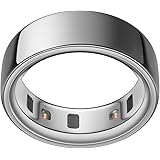
Oura Ring 4 – Silver – Size 8 – Sleep, Activity, Women’s Health, AI Advisor, Up to 8 Days of Battery Life, Size Before You Buy, Android & iOS Compatible
$349.00 (as of March 21, 2026 02:58 GMT +00:00 – More infoProduct prices and availability are accurate as of the date/time indicated and are subject to change. Any price and availability information displayed on [relevant Amazon Site(s), as applicable] at the time of purchase will apply to the purchase of this product.)
Insta360 Ace Pro 2 Dual Battery Bundle – 8K Waterproof Action Camera Co-Engineered with Leica, 1/1.3″ Sensor, Dual AI Chip, Leading Low Light, Superior Audio
$419.00 (as of March 21, 2026 02:58 GMT +00:00 – More infoProduct prices and availability are accurate as of the date/time indicated and are subject to change. Any price and availability information displayed on [relevant Amazon Site(s), as applicable] at the time of purchase will apply to the purchase of this product.)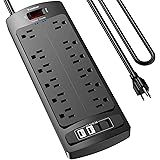
6 Ft Extension Cord Power Strip, Teiobar Surge Protector with 12 AC Outlets and 4 USB Ports for Home, Office, Dorm Essentials, 1875W/15A, 2700 Joules, ETL Listed, Black
$16.99 (as of March 21, 2026 02:58 GMT +00:00 – More infoProduct prices and availability are accurate as of the date/time indicated and are subject to change. Any price and availability information displayed on [relevant Amazon Site(s), as applicable] at the time of purchase will apply to the purchase of this product.)
sylacor 3 Pack Ring Cover Compatible with Oura Ring Gen 4/Gen 3 Horizon/Heritage, Upgraded Anti-Scratch TPU Protector for Men Women, NOT for Oura Ring 4 Ceramic
$8.99 (as of March 21, 2026 02:58 GMT +00:00 – More infoProduct prices and availability are accurate as of the date/time indicated and are subject to change. Any price and availability information displayed on [relevant Amazon Site(s), as applicable] at the time of purchase will apply to the purchase of this product.)
Roku Smart TV – 40-Inch Select Series, 1080p Full HD TV – Roku TV with Voice Remote – Flat Screen LED Television with Wi-Fi for Streaming Live Local News, Sports, Family Entertainment
$129.99 (as of March 21, 2026 02:58 GMT +00:00 – More infoProduct prices and availability are accurate as of the date/time indicated and are subject to change. Any price and availability information displayed on [relevant Amazon Site(s), as applicable] at the time of purchase will apply to the purchase of this product.)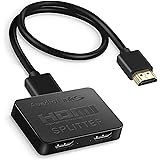
avedio links HDMI Splitter 1 in 2 Out [w/ 4 Ft Hdmi Cable]Not for Extended Display-Mirror Same Screen Only, 4K 1×2 HDMI Splitter 1 to 2 for 3D 1080P@60Hz, Copy 1 Source to 2 Displays at The Same Time
$14.28 (as of March 21, 2026 02:58 GMT +00:00 – More infoProduct prices and availability are accurate as of the date/time indicated and are subject to change. Any price and availability information displayed on [relevant Amazon Site(s), as applicable] at the time of purchase will apply to the purchase of this product.)
Apple Watch SE 3 [GPS 40mm] Smartwatch with Starlight Aluminum Case with Starlight Sport Band – S/M. Fitness and Sleep Trackers, Heart Rate Monitor, Always-On Display, Water Resistant
$219.00 (as of March 21, 2026 02:58 GMT +00:00 – More infoProduct prices and availability are accurate as of the date/time indicated and are subject to change. Any price and availability information displayed on [relevant Amazon Site(s), as applicable] at the time of purchase will apply to the purchase of this product.)
Sony WF-1000XM6 The Best Truly Wireless Noise Cancelling Earbuds (2026 Model), Bluetooth in-Ear Headphones, with Studio-Quality Sound, Up to 24 Hours of Battery Life, Black
$298.00 (as of March 21, 2026 02:58 GMT +00:00 – More infoProduct prices and availability are accurate as of the date/time indicated and are subject to change. Any price and availability information displayed on [relevant Amazon Site(s), as applicable] at the time of purchase will apply to the purchase of this product.)
Amazon Echo Dot Max (newest model), Alexa speaker with room-filling sound and nearly 3x bass, Great for living rooms and medium-sized spaces, Designed for Alexa+, Graphite
$74.99 (as of March 21, 2026 02:58 GMT +00:00 – More infoProduct prices and availability are accurate as of the date/time indicated and are subject to change. Any price and availability information displayed on [relevant Amazon Site(s), as applicable] at the time of purchase will apply to the purchase of this product.)