In the rapidly evolving field of artificial intelligence (AI), reinforcement learning (RL) has emerged as one of the most promising paradigms for enabling machines to learn and make decisions autonomously. Unlike supervised learning, where models are trained on labeled datasets, or unsupervised learning, which focuses on finding patterns in unlabeled data, reinforcement learning is inspired by behavioral psychology. It revolves around the idea of an agent learning to make decisions by interacting with an environment and receiving feedback in the form of rewards or penalties. This article explores the fundamentals of reinforcement learning, its applications, challenges, and its potential to shape the future of AI.
What is Reinforcement Learning?
Reinforcement learning is a type of machine learning where an agent learns to achieve a goal by performing actions in an environment and receiving feedback in the form of rewards or penalties. The agent’s objective is to maximize the cumulative reward over time by discovering the optimal sequence of actions, known as a policy. The key components of RL include:
- Agent: The learner or decision-maker.
- Environment: The world in which the agent operates.
- State: The current situation of the agent in the environment.
- Action: The decision taken by the agent.
- Reward: The feedback the agent receives after performing an action.
- Policy: A strategy that the agent uses to determine actions based on states.
- Value Function: A prediction of future rewards, used to evaluate the desirability of states.
- Q-Learning: A model-free RL algorithm that learns the value of actions in particular states.
The learning process is iterative: the agent explores the environment, takes actions, observes the outcomes, and updates its policy to improve future decisions.
How Does Reinforcement Learning Work?
Reinforcement learning is based on the concept of trial and error. The agent starts with no prior knowledge of the environment and learns by interacting with it. Here’s a simplified breakdown of the process:
- Observation: The agent observes the current state of the environment.
- Action: The agent selects an action based on its current policy.
- Reward: The environment provides a reward or penalty based on the action.
- Update: The agent updates its policy to improve future decisions.
- Repeat: The process continues until the agent learns an optimal policy.
One of the most famous examples of RL in action is AlphaGo, developed by DeepMind. AlphaGo used reinforcement learning to defeat world champions in the complex board game Go, demonstrating the power of RL in mastering tasks that require strategic thinking and long-term planning.
Applications of Reinforcement Learning
Reinforcement learning has a wide range of applications across various industries. Some notable examples include:
- Gaming: RL has been used to develop AI systems that can play and master complex games like chess, Go, and video games.
- Robotics: RL enables robots to learn tasks such as walking, grasping objects, and navigating environments autonomously.
- Healthcare: RL is being used to optimize treatment plans, personalize medicine, and manage resources in hospitals.
- Finance: RL algorithms are used for portfolio management, algorithmic trading, and risk assessment.
- Autonomous Vehicles: Self-driving cars use RL to make real-time decisions, such as lane changes and obstacle avoidance.
- Recommendation Systems: Platforms like Netflix and YouTube use RL to personalize content recommendations for users.
- Energy Management: RL is applied to optimize energy consumption in smart grids and reduce costs.
Challenges in Reinforcement Learning
Despite its potential, reinforcement learning faces several challenges:
- Exploration vs. Exploitation: The agent must balance exploring new actions to discover their effects and exploiting known actions that yield high rewards.
- Sparse Rewards: In some environments, rewards are infrequent, making it difficult for the agent to learn effectively.
- High Computational Costs: Training RL models can be computationally expensive, especially for complex environments.
- Sample Inefficiency: RL often requires a large number of interactions with the environment to learn effectively, which can be time-consuming.
- Safety and Ethics: In real-world applications, ensuring that RL agents make safe and ethical decisions is critical.
The Future of Reinforcement Learning
Reinforcement learning is poised to play a significant role in the future of AI. Advances in deep reinforcement learning, which combines RL with deep neural networks, have already led to breakthroughs in areas like natural language processing, computer vision, and robotics. As researchers continue to address challenges such as sample efficiency and safety, RL is expected to enable even more sophisticated autonomous systems.
One exciting direction is the integration of RL with other AI techniques, such as transfer learning and meta-learning, to create agents that can generalize across tasks and environments. Additionally, the development of more efficient algorithms and hardware will make RL more accessible for real-world applications.
Conclusion
Reinforcement learning represents a powerful approach to training machines to make decisions autonomously. By mimicking the way humans and animals learn through interaction and feedback, RL has the potential to revolutionize industries and solve complex problems. While challenges remain, ongoing research and technological advancements are paving the way for a future where RL-driven systems are an integral part of our daily lives. As we continue to explore the possibilities of reinforcement learning, one thing is clear: the journey toward truly intelligent machines is just beginning.
Reinforcement learning is not just a tool for AI researchers; it is a gateway to a future where machines can learn, adapt, and thrive in dynamic and unpredictable environments. The possibilities are limitless, and the impact on society will be profound.
Affiliate Program

Amazon Fire TV 32″ 2-Series (newest model), HD smart TV with Alexa Remote, fast streaming, Dolby Audio, Ambient Experience, free and live TV
$144.99 (as of March 21, 2026 02:58 GMT +00:00 – More infoProduct prices and availability are accurate as of the date/time indicated and are subject to change. Any price and availability information displayed on [relevant Amazon Site(s), as applicable] at the time of purchase will apply to the purchase of this product.)
Blink Outdoor 4 – Wireless smart security camera, two-year battery life, two-way talk. Required Sync Module not included – Add-on camera
$37.99 (as of March 21, 2026 02:58 GMT +00:00 – More infoProduct prices and availability are accurate as of the date/time indicated and are subject to change. Any price and availability information displayed on [relevant Amazon Site(s), as applicable] at the time of purchase will apply to the purchase of this product.)
Amazon Kindle Paperwhite 16GB (newest model) – 20% faster, with new 7″ glare-free display and weeks of battery life – Black
$159.99 (as of March 21, 2026 02:58 GMT +00:00 – More infoProduct prices and availability are accurate as of the date/time indicated and are subject to change. Any price and availability information displayed on [relevant Amazon Site(s), as applicable] at the time of purchase will apply to the purchase of this product.)
Apple 2026 MacBook Air 15-inch Laptop with M5 chip: Built for AI, 15.3-inch Liquid Retina Display, 16GB Unified Memory, 512GB SSD, 12MP Center Stage Camera, Touch ID, Wi-Fi 7; Midnight
$1,249.00 (as of March 21, 2026 02:58 GMT +00:00 – More infoProduct prices and availability are accurate as of the date/time indicated and are subject to change. Any price and availability information displayed on [relevant Amazon Site(s), as applicable] at the time of purchase will apply to the purchase of this product.)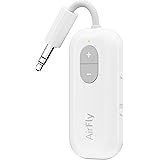
Twelve South AirFly SE | Bluetooth Wireless Audio Transmitter Adapter for AirPods/Headphones, 20+ Hr Battery, Works with 3.5mm aux Jacks on Airplanes, TVs, Gym Equipment, and Travel
$34.99 (as of March 21, 2026 02:58 GMT +00:00 – More infoProduct prices and availability are accurate as of the date/time indicated and are subject to change. Any price and availability information displayed on [relevant Amazon Site(s), as applicable] at the time of purchase will apply to the purchase of this product.)
TOZO T10 Wireless Earbuds Bluetooth 5.3 Headphones, App Customize EQ, Ergonomic Design, 55H Playtime, Wireless Charging Case, IPX8 Waterproof Sound in-Ear Headset, New Version
$24.99 (as of March 21, 2026 02:58 GMT +00:00 – More infoProduct prices and availability are accurate as of the date/time indicated and are subject to change. Any price and availability information displayed on [relevant Amazon Site(s), as applicable] at the time of purchase will apply to the purchase of this product.)
kurdene Wireless Earbuds Bluetooth Headphones Sport,Over Ear Buds with Deep Bass Sound,60Hrs Playtime Earphones Redesigned Comfort Fit with Earhooks for Running,Meeting,Workout-Black
$9.98 (as of March 21, 2026 02:58 GMT +00:00 – More infoProduct prices and availability are accurate as of the date/time indicated and are subject to change. Any price and availability information displayed on [relevant Amazon Site(s), as applicable] at the time of purchase will apply to the purchase of this product.)
SANSUI Computer Monitor 24 inch Eye Care FHD 1080P Display HDMI,VGA Ports with 178° Viewing Angle/Frame-Less/Tilt/VESA Compatible for Office and Home
$77.35 (as of March 21, 2026 02:58 GMT +00:00 – More infoProduct prices and availability are accurate as of the date/time indicated and are subject to change. Any price and availability information displayed on [relevant Amazon Site(s), as applicable] at the time of purchase will apply to the purchase of this product.)
Apple Watch Series 11 [GPS 42mm] Smartwatch with Rose Gold Aluminum Case with Light Blush Sport Band – S/M. Sleep Score, Fitness Tracker, Health Monitoring, Always-On Display, Water Resistant
$299.00 (as of March 21, 2026 02:58 GMT +00:00 – More infoProduct prices and availability are accurate as of the date/time indicated and are subject to change. Any price and availability information displayed on [relevant Amazon Site(s), as applicable] at the time of purchase will apply to the purchase of this product.)