The Transformer architecture has revolutionized natural language processing (NLP) and various other domains. Here, we’ll delve into the key concepts and techniques that form the foundation of these powerful models.
1. The Basic Model
- Architecture: The Transformer model relies on a novel architecture that eschews recurrence and instead leverages an attention mechanism to establish global dependencies between input and output sequences.
- Components:
- Self-Attention Mechanism: The heart of the Transformer, self-attention allows each position in the input sequence to attend to all positions, capturing contextual information effectively.
- Positional Encoding: To account for sequence order, positional encodings are added to the input embeddings.
- Multi-Head Self-Attention: Multiple attention heads allow the model to focus on different aspects of the input.
- Layer Normalization: Ensures stable training by normalizing layer outputs.
- Feed-Forward Neural Networks: These networks process the attention outputs.
- Training and Inference: Transformers are trained using large-scale unsupervised pre-training followed by fine-tuning on specific downstream tasks.
2. Improved Architectures
- Researchers have proposed several refinements to the basic Transformer:
- Locally Attentive Models: These models introduce locality constraints to self-attention, improving efficiency.
- Deep Models: Stacking more layers enhances the model’s capacity.
- Numerical Method-Inspired Models: Inspired by numerical methods, these models achieve better performance.
- Wide Models: Increasing model width (number of parameters) improves expressiveness.
3. Efficient Models
- Strategies for efficiency include:
- Sparse Attention: Reducing attention computation by attending only to relevant positions.
- Recurrent and Memory Models: Combining Transformers with recurrent or memory components.
- Low-dimensional Models: Reducing embedding dimensions.
- Parameter and Activation Sharing: Sharing parameters across layers.
- Alternatives to Self-Attention: Exploring alternatives to the standard self-attention mechanism.
- Conditional Computation: Dynamically activating parts of the model.
- Model Transfer and Pruning: Transferring knowledge from pre-trained models and pruning unnecessary parameters.
- Sequence Compression: Reducing sequence length during training.
- High-Performance Computing Methods: Leveraging HPC techniques for faster training.
4. Applications
- Transformers find applications in various domains:
- Language Modeling: Transformers excel at predicting the next word in a sequence.
- Text Encoding: They create dense vector representations for text.
- Speech Translation: Transformers handle speech-to-text and translation tasks.
- Vision Models: Transformers are also used in computer vision.
- Multimodal Models: Combining text and visual information.
In summary, Transformers have become the backbone of modern NLP and beyond. Their ability to capture long-range dependencies and handle diverse tasks makes them indispensable in the AI landscape.
Affiliate Program
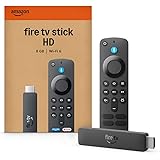
Amazon Fire TV Stick HD (newest model), free & live TV, Alexa Voice Remote, powered by the TV, effortless setup, find shows faster with Alexa+
$15.99 (as of September 27, 2026 09:30 GMT +00:00 – More infoProduct prices and availability are accurate as of the date/time indicated and are subject to change. Any price and availability information displayed on [relevant Amazon Site(s), as applicable] at the time of purchase will apply to the purchase of this product.)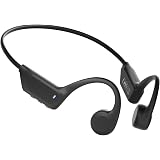
New Waterproof Open-Ear Bone Conduction Headphones – Bluetooth 6.0, Long Battery Life, Ultra-Light Wireless Headset with Stable Connection, Ideal for Running, Cycling, Workout, Hiking
$59.99 (as of September 27, 2026 09:30 GMT +00:00 – More infoProduct prices and availability are accurate as of the date/time indicated and are subject to change. Any price and availability information displayed on [relevant Amazon Site(s), as applicable] at the time of purchase will apply to the purchase of this product.)
blink plus plan with monthly auto-renewal
$11.99 (as of September 27, 2026 09:30 GMT +00:00 – More infoProduct prices and availability are accurate as of the date/time indicated and are subject to change. Any price and availability information displayed on [relevant Amazon Site(s), as applicable] at the time of purchase will apply to the purchase of this product.)
Beats 360 — Over-Ear Headphones with Interchangeable Cushions, Sweat & Water Resistance and Noise Cancellation — Cloud with Cloud Performance Knit Cushions
$349.00 (as of September 27, 2026 09:30 GMT +00:00 – More infoProduct prices and availability are accurate as of the date/time indicated and are subject to change. Any price and availability information displayed on [relevant Amazon Site(s), as applicable] at the time of purchase will apply to the purchase of this product.)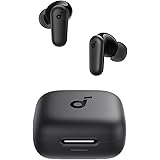
Soundcore P30i by Anker Noise Cancelling Earbuds, Hands-Free Viewing | Strong and Smart Noise Cancelling, Powerful Bass, 45H Playtime, 2-in-1 Case and Phone Stand, IP54, Bluetooth 5.4
$26.99 (as of September 27, 2026 09:30 GMT +00:00 – More infoProduct prices and availability are accurate as of the date/time indicated and are subject to change. Any price and availability information displayed on [relevant Amazon Site(s), as applicable] at the time of purchase will apply to the purchase of this product.)
OURA Ring 5 Sizing Kit – Size Before You Buy | Unique Sizing, Not Standard Ring Sizing – Receive Amazon Credit for Oura Ring 5 Purchase
$10.00 (as of September 27, 2026 09:30 GMT +00:00 – More infoProduct prices and availability are accurate as of the date/time indicated and are subject to change. Any price and availability information displayed on [relevant Amazon Site(s), as applicable] at the time of purchase will apply to the purchase of this product.)
Amazon Fire TV Stick 4K Plus (newest model) with AI-powered Fire TV Search, Wi-Fi 6, stream hundreds of thousands of movies and shows, free & live TV, find shows faster with Alexa+
$37.99 (as of September 27, 2026 09:30 GMT +00:00 – More infoProduct prices and availability are accurate as of the date/time indicated and are subject to change. Any price and availability information displayed on [relevant Amazon Site(s), as applicable] at the time of purchase will apply to the purchase of this product.)
Blink Outdoor 4 and Battery Doorbell 2K+ (newest model) — Two-year battery 1080p cameras and 2K battery doorbell. Sync Module Core included — 5 Cameras + Doorbell (Black)
$104.99 (as of September 27, 2026 09:30 GMT +00:00 – More infoProduct prices and availability are accurate as of the date/time indicated and are subject to change. Any price and availability information displayed on [relevant Amazon Site(s), as applicable] at the time of purchase will apply to the purchase of this product.)
Ljusmicker for AirPods 5/4 Case (2026/2024) with Cleaner Kit,Black | Soft Silicone Protective Cover for Apple AirPods 5 Case/AirPods 4 Case with Keychain for Women Men,Supports Wireless Charging
$1.68 (as of September 27, 2026 09:30 GMT +00:00 – More infoProduct prices and availability are accurate as of the date/time indicated and are subject to change. Any price and availability information displayed on [relevant Amazon Site(s), as applicable] at the time of purchase will apply to the purchase of this product.)